How Dental Jewelry Became Part of the Wider Conversation Around Personal Style
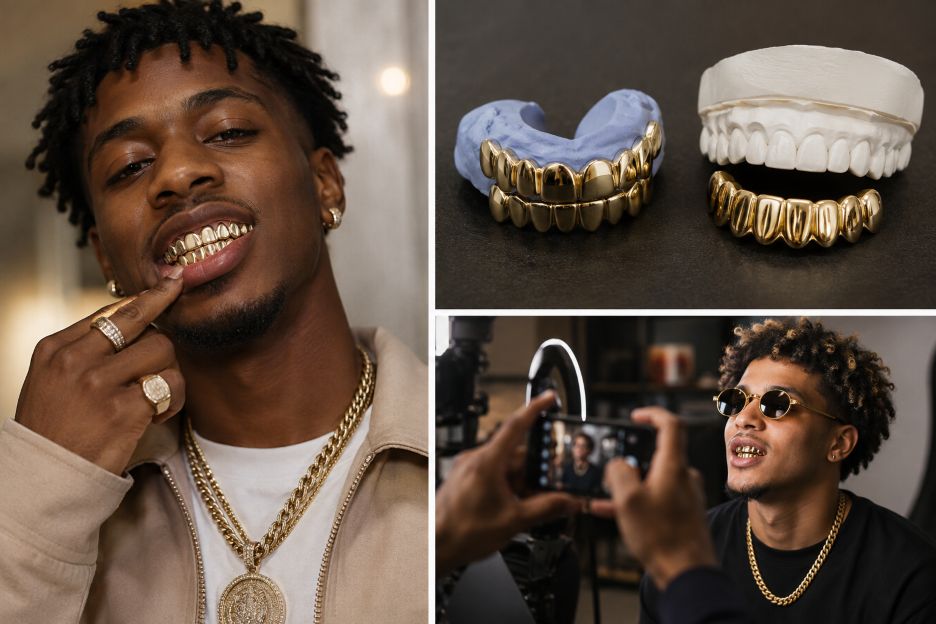
Jewelry has long been used to signal taste, identity, status, and belonging, but the places people decorate have expanded beyond choices such as ears, necks, hands, and wrists. Music videos, red-carpet appearances, fashion photography, and social platforms have made unconventional forms of adornment easier to see. The American Dental Association notes that tooth gems, grills, and other oral ornaments are contemporary forms of body art and self-expression, while removable grills were popularized through music videos beginning in the 1980s.
That wider visibility helps explain why dental jewelry now appears in conversations that once focused mainly on rings, necklaces, earrings, and watches. Instead of decorating an area around the face, removable tooth accessories make the smile itself part of the styling decision. Their visual impact is immediate, especially in close-up photographs and video, which suits digital culture.
How Did Jewelry Move From the Body to the Smile?
Decorating teeth is not a new idea. The American Dental Association describes archaeological evidence of dental ornamentation among ancient Maya communities, including inlays made from jade and other materials. Modern removable grills are different in construction and cultural meaning, but the longer history shows that teeth have served as a visible surface for adornment across societies.
The modern grill is closely associated with hip-hop culture. Research published in Topoi, a peer-reviewed philosophy journal, traces the accessory’s rise through rap and hip-hop scenes in the 1980s and explains how reflective materials draw attention directly to the mouth. The Saint Louis Art Museum also connects gilded teeth with performers such as Slick Rick and with Nelly’s 2005 song “Grillz.” These references helped move the accessory from music communities into wider public awareness.
Premade and Custom Pieces Serve Different Needs
One reason tooth accessories can reach a wider audience is that they are available in forms. Premade pieces are generally designed as lower-cost, ready-to-ship options. Custom versions require more preparation because they are made around the shape of a particular wearer’s teeth.
Rhino Grillz states that its premade gold-plated designs use silicone molding bars to fit the pieces over the teeth. The company also explains that its custom gold options begin with a molding kit. The wearer makes an impression, returns it, and the piece is produced to match that mold. This creates a clear difference between a ready-made accessory adjusted by the wearer and a made-to-order piece based on a personal impression.
The price and production process also reflect that difference. The same Rhino Grillz collection describes premade plated options as less expensive and available for faster shipping, while custom solid-gold versions require production time after the impression is returned. For shoppers, that distinction is familiar. Some people want an accessible way to try a look, while others value materials, personalization, and a closer fit.
Why Does Visibility Matter So Much?
Highly visible accessories can spread quickly because they are easy to recognize. That effect has grown as digital media gives fashion choices repeated exposure through social platforms, creator content, and online publications. A ring may disappear in a wide camera shot, but a bright piece worn over the front teeth can become part of a performer’s facial image. The American Dental Association notes that removable grills were popularized in music videos and that celebrities have promoted them through social media. Repeated exposure helps explain why the style keeps returning to public discussion even when it remains outside conventional jewelry choices.
Research in Topoi also discusses the role of artists and online media in spreading grill imagery beyond its original cultural settings. As performers, jewelers, photographers, and fashion media reinterpret a recognizable accessory, its meaning can expand. A style associated with one scene may later be discussed through the wider language of luxury, individuality, craftsmanship, or personal image.
Style Still Comes With Practical Considerations
Greater fashion visibility does not remove the practical issues that come with wearing something over the teeth. The American Dental Association warns that grills and other oral ornaments can trap food and plaque when hygiene is poor. It also notes possible concerns such as tooth damage and gum inflammation. Removable pieces therefore sit at an unusual intersection of fashion and oral care. Appearance may drive interest, but fit, cleanliness, materials, and wearing habits still matter.
From Niche Symbol to Wider Style Conversation
The movement of tooth accessories into mainstream fashion discussion follows a familiar pattern. A distinctive look develops meaning within a cultural space, gains exposure through performers and media, and becomes recognizable to people outside its original audience. Recognition, however, does not mean universal adoption.
Grills remain a bold choice compared with traditional jewelry, and their appeal depends on personal taste, cultural context, cost, fit, and comfort. Still, their journey shows how the boundaries of personal style can change. As fashion becomes more visual and closely tied to digital media, highly noticeable accessories are likely to keep moving between niche communities and broader conversations about how people choose to present themselves.